The Art of Ikebana, with Fritz Hansen
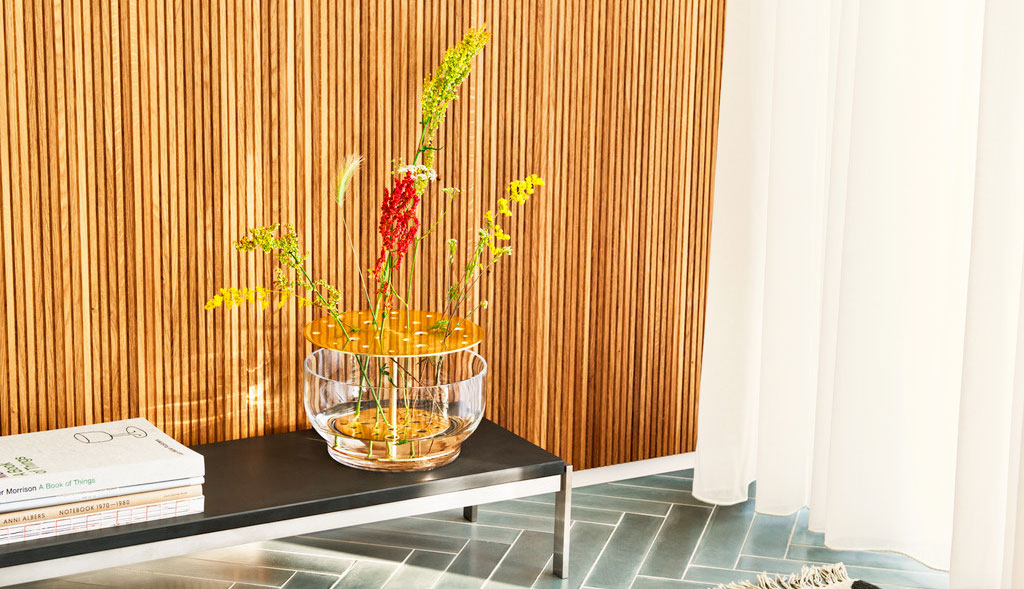
Discover the principles behind the centuries-old Japanese art of floral design.
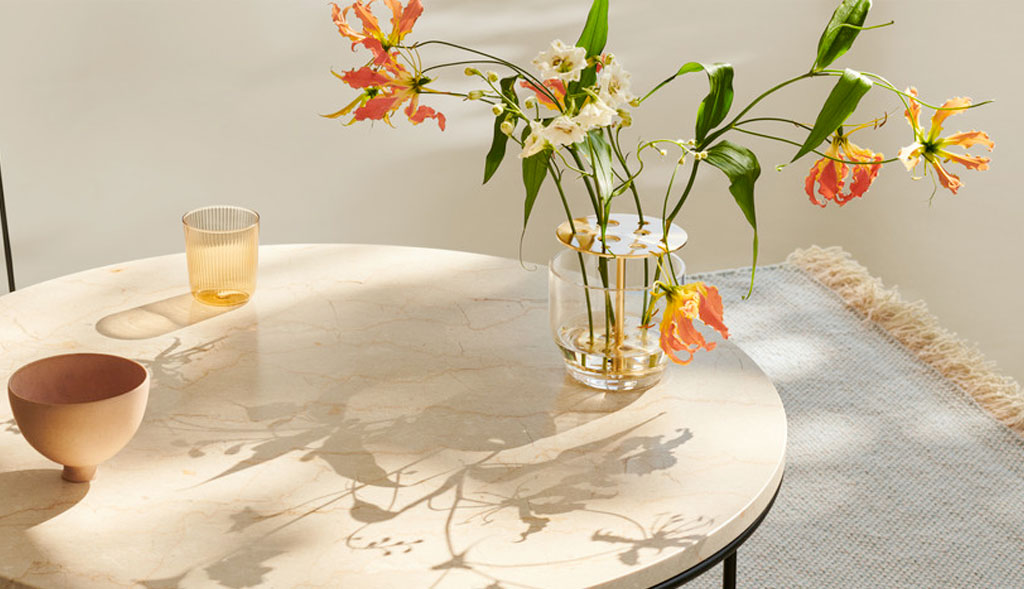
‘Ikebana is often translated to Japanese floral art of flower arrangement,’ says Tomoko Sempo Yanagi, an ikebana professor and the chairperson of Ikenobo UK & Ireland, ‘But, in my view, ikebana isn’t just an artistic arrangement of flowers and plants, the practice is as spiritual as it is technical.’ Tomoko, who was born in Japan and is now based in the UK, has been practising ikebana for more than thirty years and was trained at the oldest school of ikebana, known as Ikenobo.
Dating back to the 7th century when Buddhists started offering flowers at temple altars, ikebana was later formalized in the 16th century by emperors and aristocrats. The practice also has roots in the ancient Shinto religion – a belief system that conceives ‘god,’ or ‘spirits,’ as residing in natural phenomena such as trees, flowers, and wind. Today, the art form is practised by professionals and amateurs alike. At its core, ikebana involves carefully selecting plants and flowers to create a form that honours natural characteristics when placed in a new environment.
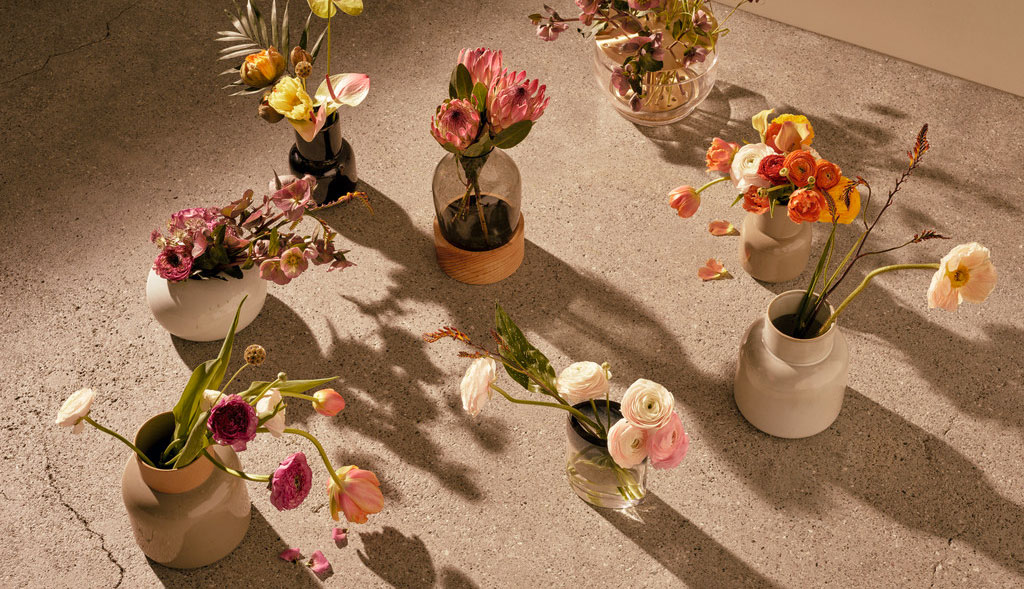
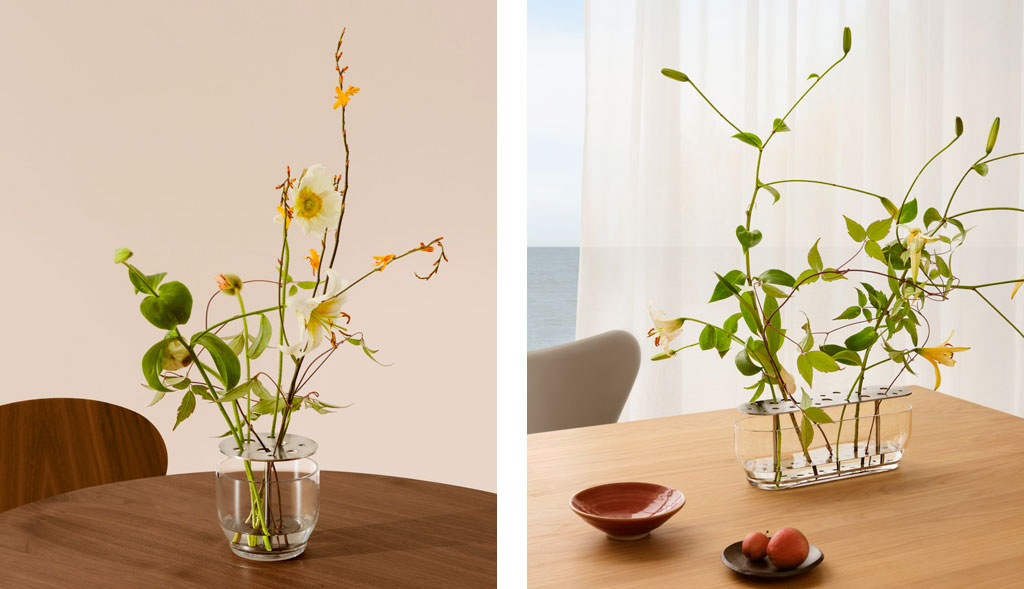
Be mind in the selection of materials
In ikebana, the process of gathering, curating, and creating is as important as the final composition itself.
‘Influenced by Zen Buddhist thought, ikebana is about cultivating contentment,’ says Mayu Arai, an ikebana teacher offering classes at her atelier in Shizuoka. She is trained within the Ohara School of ikebana, one of three major schools of Ikebana among hundreds. ‘It’s about using familiar flowers to create a small landscape that expresses the natural beauty of gardens, mountains, and fields.’‘There aren’t any rules about which plants have to be used,’ says Tomoko Sempo.
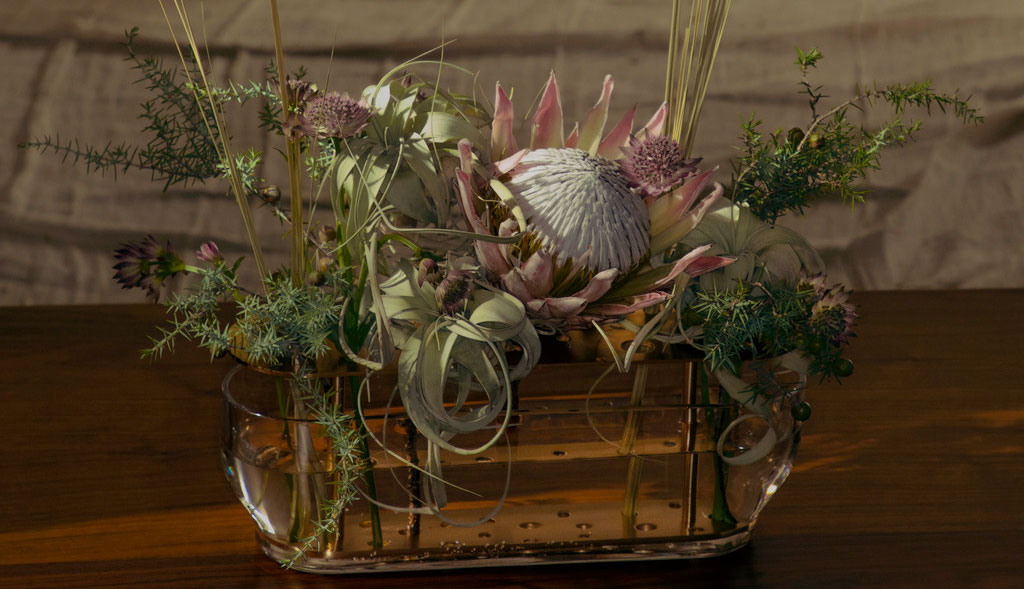
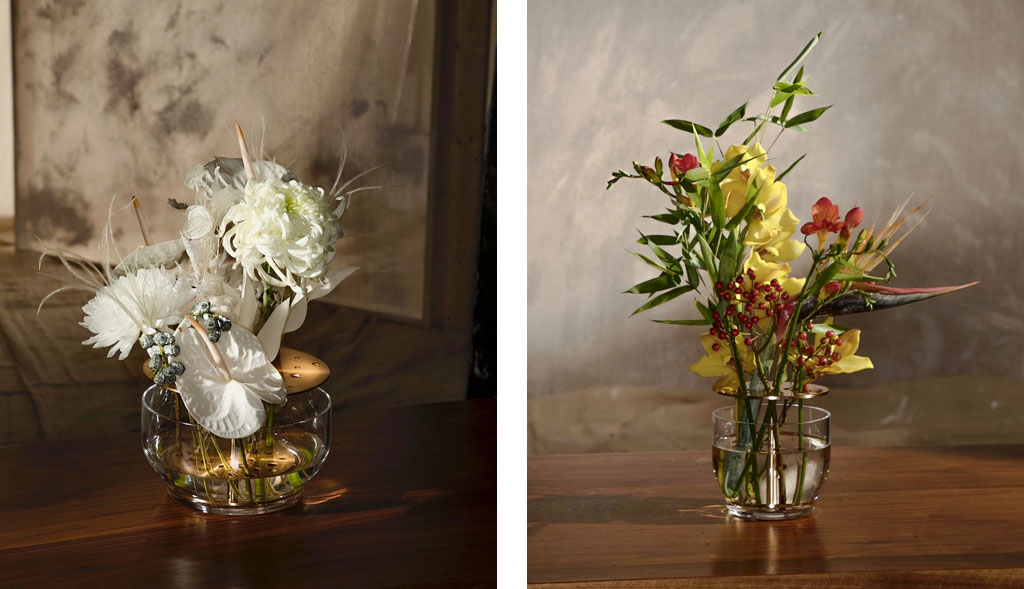
Consider the role of each plant material
‘Once you’ve collected the materials, it’s important to define the role of each one,’ Tomoko says. ‘For instance, a tall and slender plant can function as the underlying structure while the shorter one can be used to connect the flower arrangement to the container.
’For beginners, she suggests trying the Moribana style of ikebana, which takes on a freer approach while still respecting rules such as asymmetry. Typically, this involves three main types of materials (branches, leaves, or flowers), each with a distinct function in the arrangement, alongside a few supplementary plants.
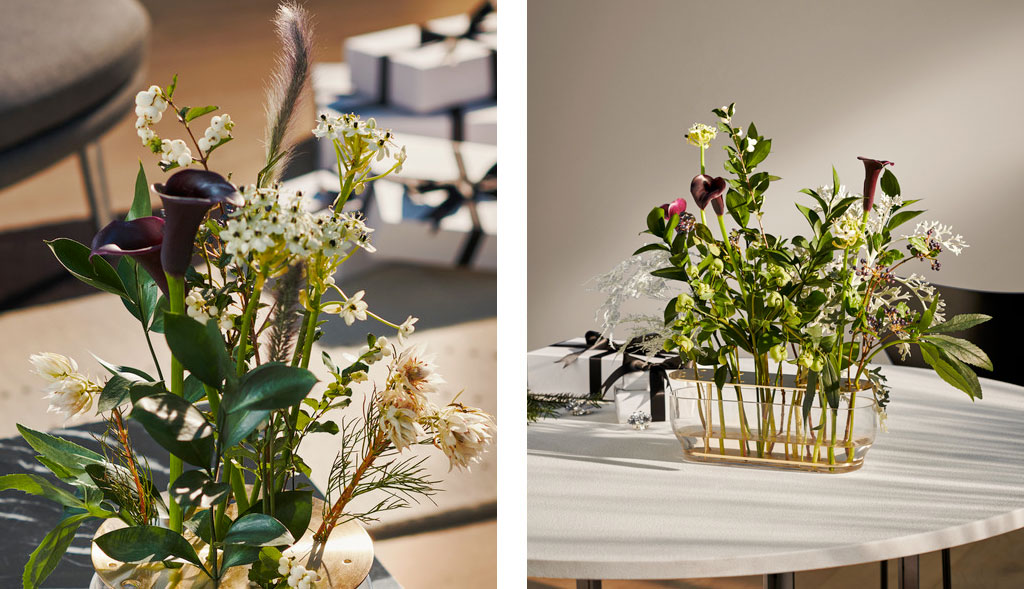
While traditional ikebana involves using a spiky device used to hold flowers in a place called a Kenzan, it is entirely possible to experiment without one. Fumiya Yamamoto, for example, focuses on the Nageire style of ikebana which is characterized by spontaneous designs and does not use a Kenzan.
Compose with harmony in mind
When composing your arrangement, Tomoko says that contrast is a good way to create a sense of balance among elements: ‘For example, if we have two materials from the same plant family, like two red roses, we would change the height, length, or direction of each one. Two beautiful things can conflict with each other, so introducing different angles and heights can maintain the harmony of the arrangement.’
Finally, keep in mind that one of the core philosophical principles in ikebana is about reflecting on the changes in seasons and the impermanence of nature. ‘Each ikebana flower arrangement incorporates the present as flowers currently in bloom; the future as flower buds that will open in a couple of days; and the past as naturally faded leaves or slightly dead-looking branches,’ adds Tomoko.
Experiment from home or join Tomoko Sempo Yanagi for one of her online courses from London.
Images courtesy of Fritz Hansen, and Otto Masters - McQueen Flowers.
Time for more? To-Tie: It's all in the name | Trending - Bouclé & Sheepskin Accent Chairs | Spotlight on Simon Legald's Bit Stool | Spotlight on the &Tradition Little Petra
-
![3daysofdesign 2026 | A Visual Diary]() All Stories3daysofdesign 2026 | A Visual DiaryRead More
All Stories3daysofdesign 2026 | A Visual DiaryRead MorePhotographic highlights from Copehagen's annual design festival. 3 Days of Design has always had a particular energy — the kind that comes from a city that takes design seriously enough to turn it into a civic event. This year felt...
-
![Renormalising how we gather, with Muuto]() All StoriesRenormalising how we gather, with MuutoRead More
All StoriesRenormalising how we gather, with MuutoRead MoreIn a light‑filled studio in Østerbro, Copenhagen, designer Maria Bruun positions her latest piece not as an answer but as a prompt. At the centre of the space sits Re‑Norm, a dining table whose geometry isn’t immediately familiar — and...