How the GUBI F300 lounge chair is made
— and why it took two years to bring back.
Pierre Paulin designed the F300 for Artifort in 1965. The Museum of Modern Art acquired it within three years. It has been in their permanent collection ever since — which tells you something about where the F300 sits in the history of 20th-century furniture design, and why GUBI's decision to bring it back into production was so celebrated.
The challenges with a reissue
When GUBI decided to bring the F300 back into production, they found little documentation detailing how it had originally been made. The reference models they examined revealed subtle variations between surviving examples, pointing to a production process that had been complex and largely manual. GUBI's in-house team — working closely with Benjamin Paulin, Pierre's son and steward of his father's design legacy through the studio Paulin, Paulin, Paulin — spent two years reverse-engineering the original before committing to production.
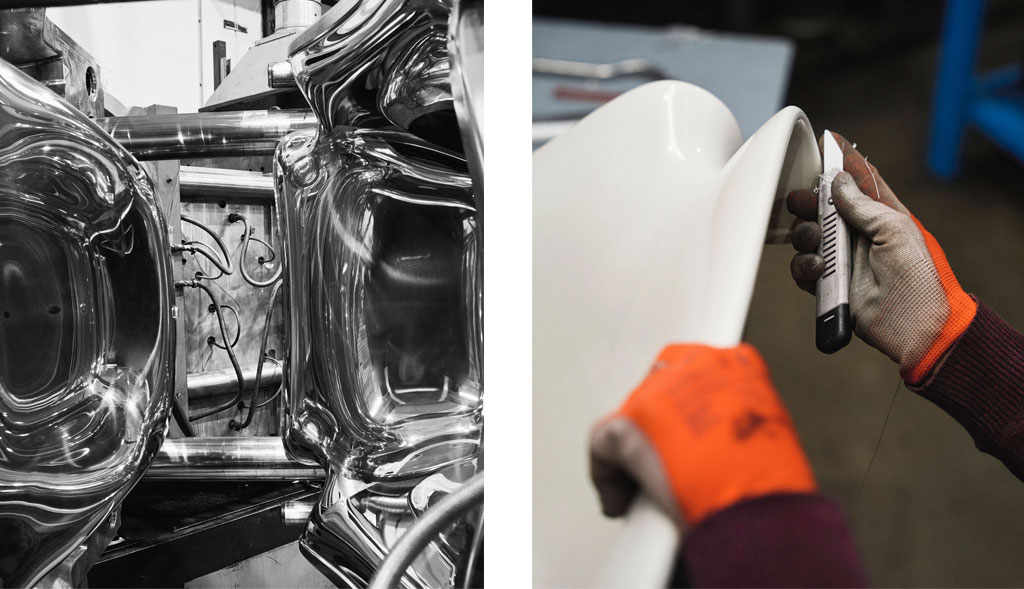
The biggest technical challenge was finding a viable alternative to fibreglass. The original material was ruled out for environmental reasons and because of its limited long-term durability. After an extensive research process, GUBI settled on HiREK — a high-performance polymer produced from industrial plastic waste, developed in Italy. It replicates the surface softness and precision of the original fibreglass, holds colour through the material rather than just on the surface, and means that minor scratches will not compromise the finish over time.
How it's made
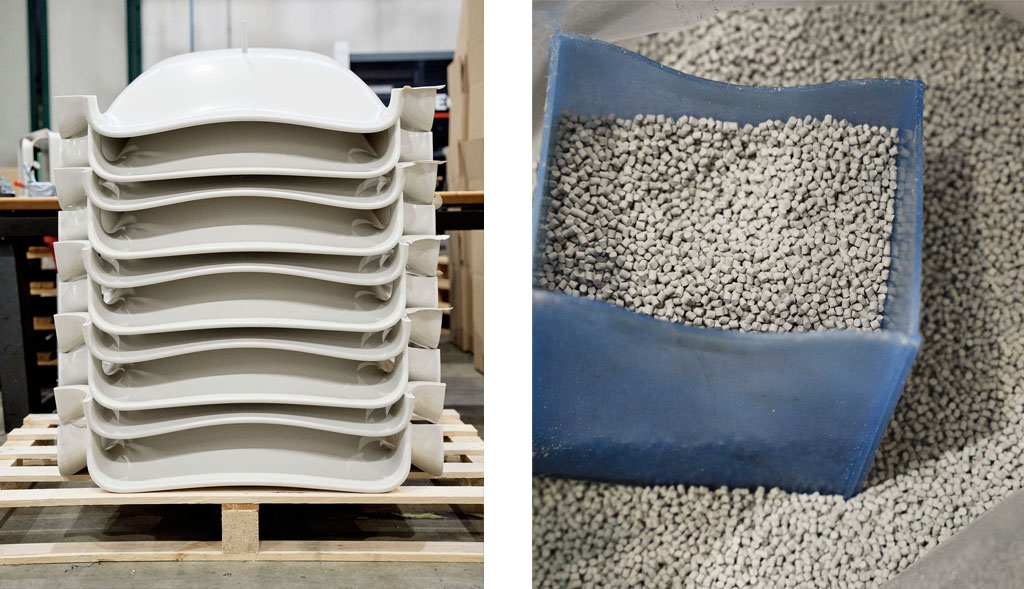
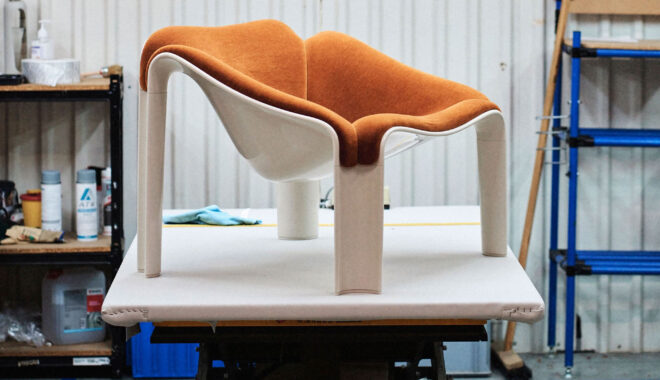
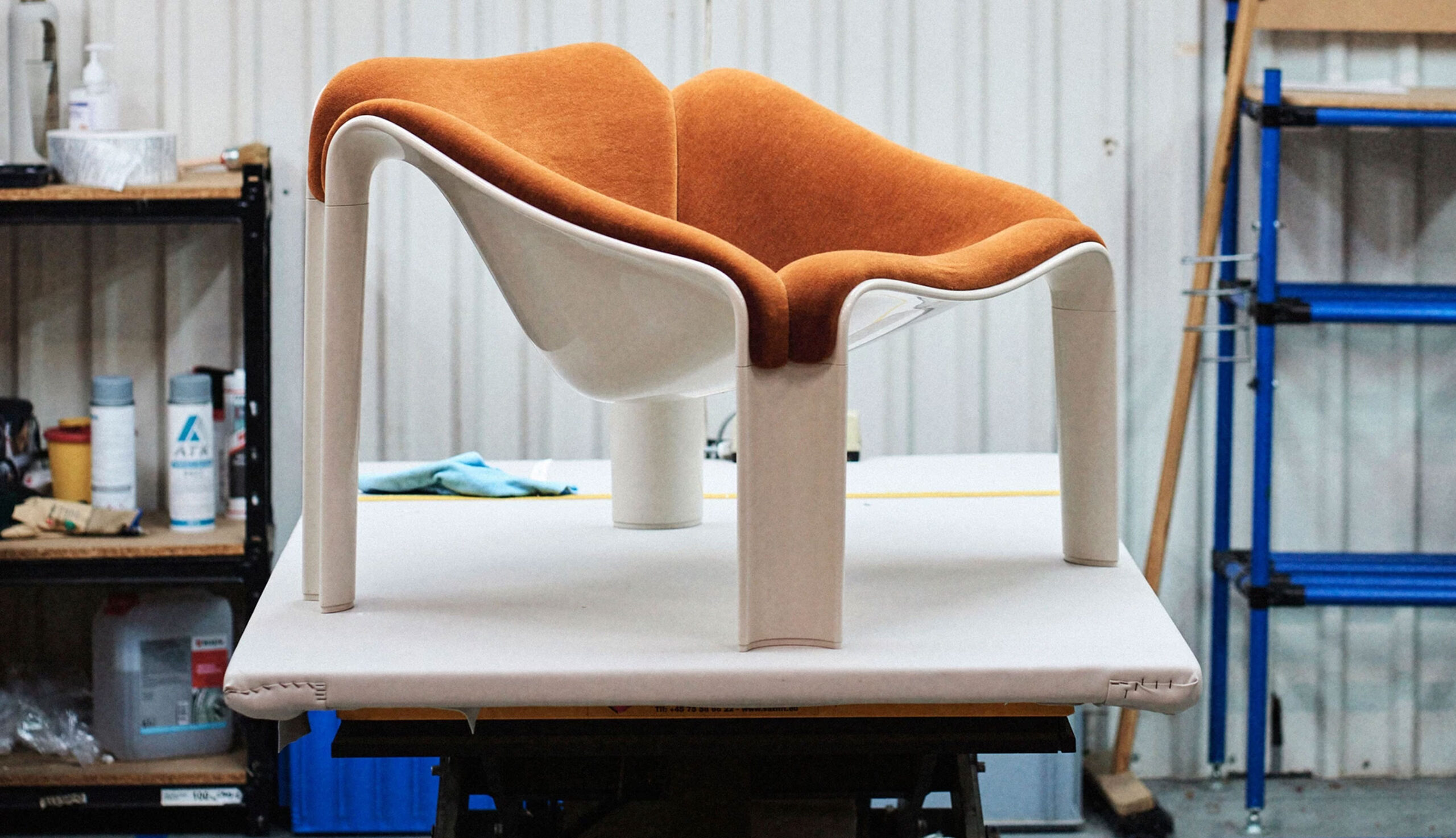
The F300 is produced through a five-stage process. It begins with HiREK pellets, melted and injected into moulds to form three separate components: seat, front leg and back leg. Each mould is engineered to vary thickness at structural stress points while preserving the chair's lightweight profile.
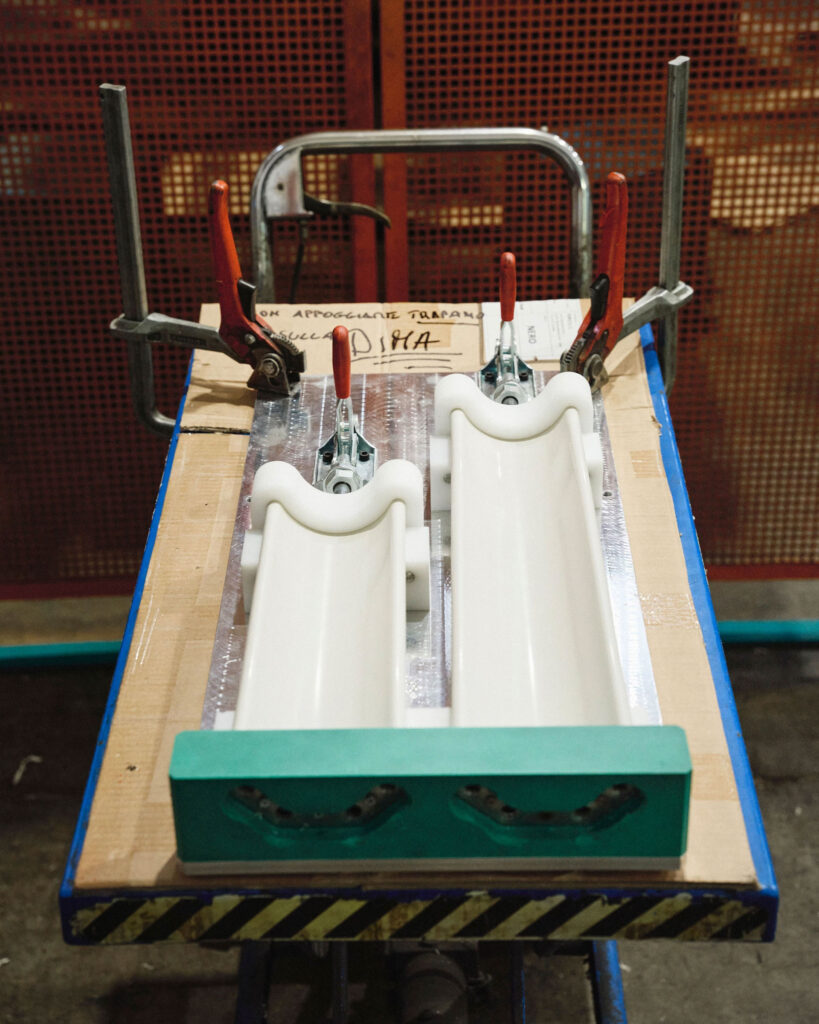
Once removed from the mould, each component is refined by hand — trimmed, smoothed using ceramic tools, and rested for 24 hours to allow the thermoplastic to stabilise before assembly. The components are then transferred to a second facility, where custom-built jigs ensure precise alignment. Bespoke metal inserts and polyethylene gliders are fitted for structural integrity and floor stability.
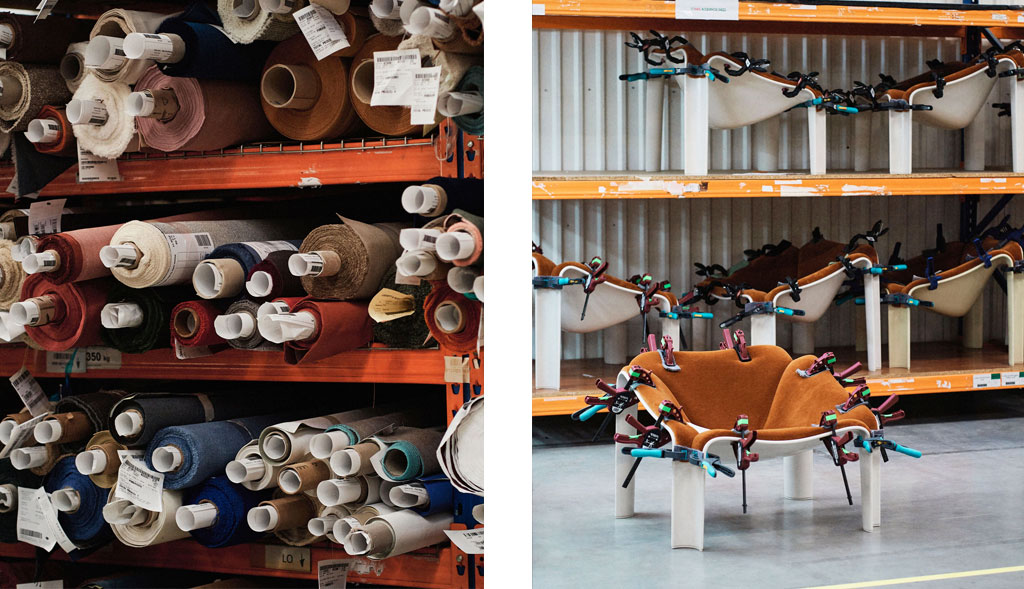
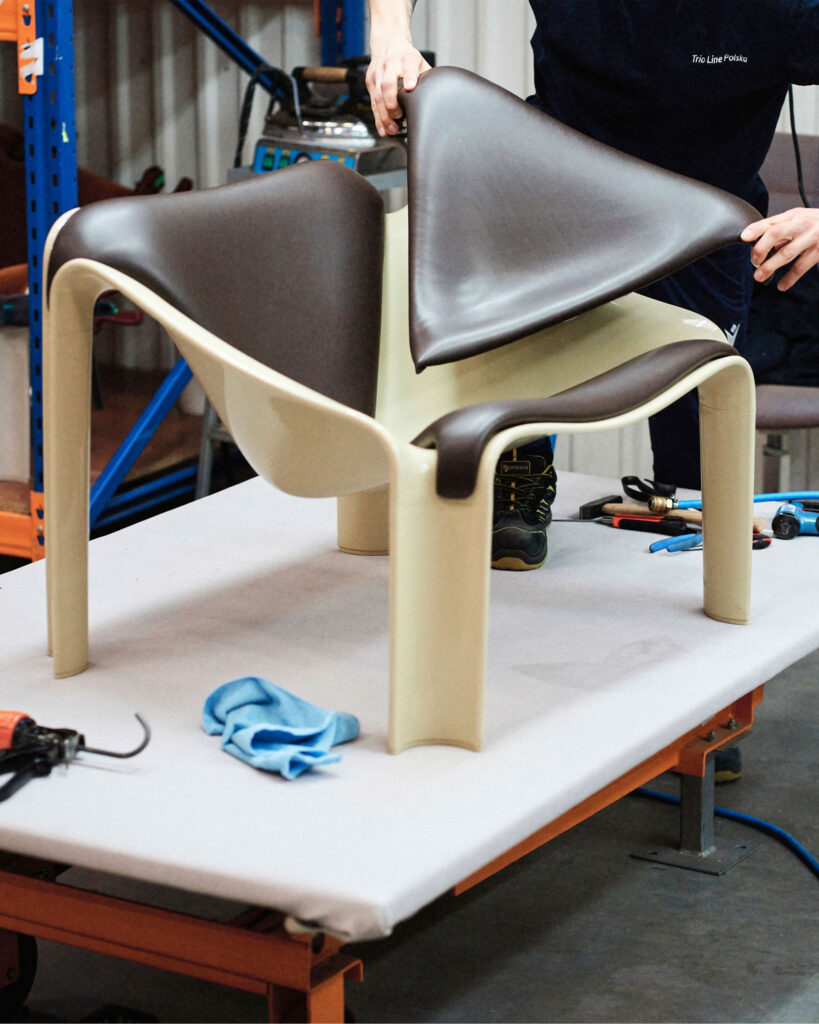
The surface is finished so that light reflects evenly across every curve — a detail that draws on automotive finishing techniques and one that is only fully visible in person. Finally, the upholstery is applied using a thermoforming process borrowed from luxury car interior production: foam is precision-cut, fixed to a moulded thermoplastic insert, wrapped in fabric, pressed under clamps and hand-steamed to a final finish. The result follows the chair's curves without creasing or pulling — something conventional upholstery techniques cannot achieve on a form with no straight lines.
Each chair is inspected under varied lighting conditions before it is approved. The tolerances involved — in a form where every surface is curved and load-bearing simultaneously — mean that quality control is not a final step so much as a condition of the entire process.
What Paulin designed
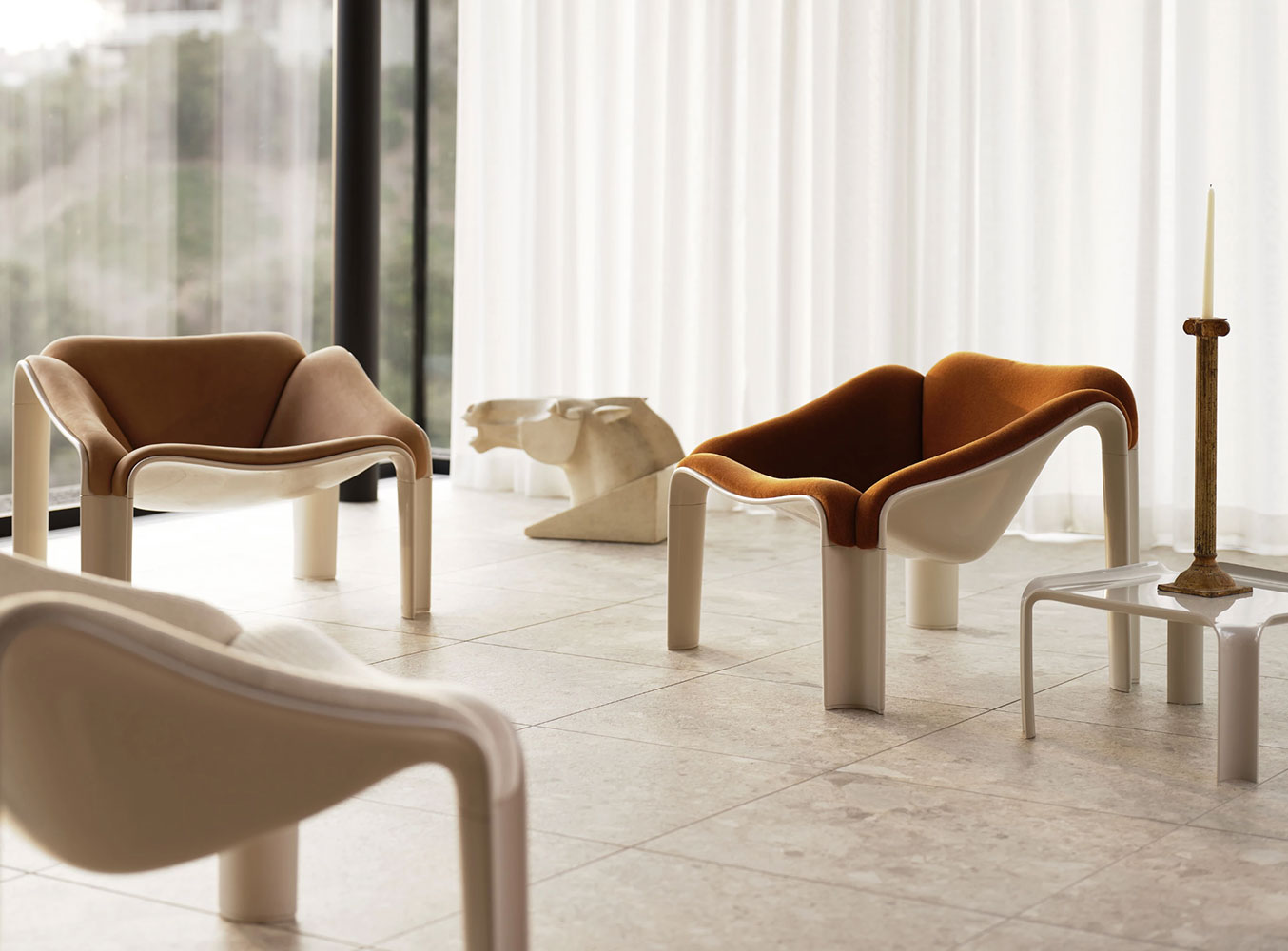
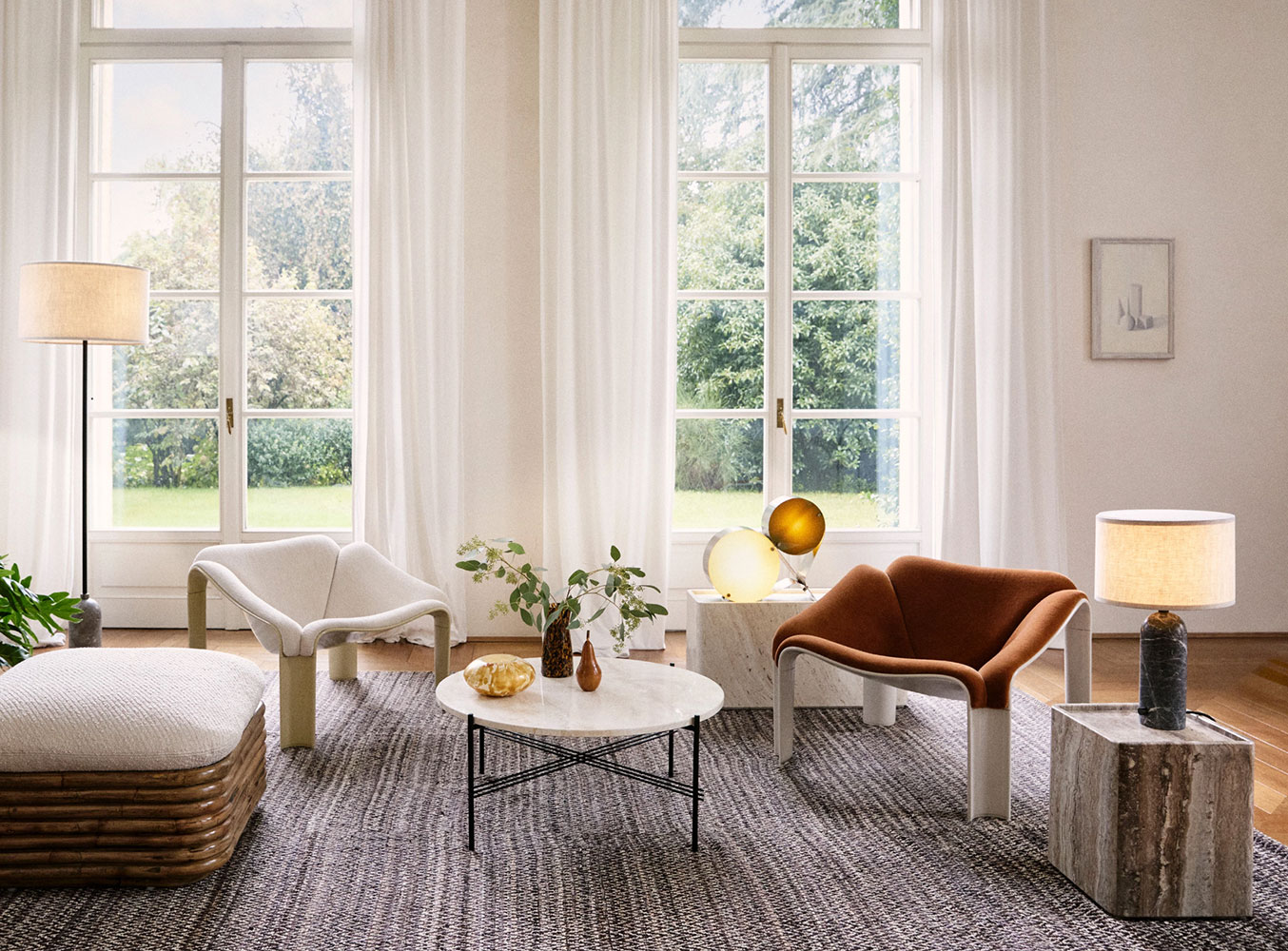
The F300 sits low to the ground. It has no flat surfaces and no prescribed sitting position. Because the geometry gives you no single correct angle of approach, you find your own way into it. Paulin described himself as a functionalist who added "two little drops of poetry" to his work. The F300 is a reasonable illustration of what he meant: a chair that works precisely because it was designed around how the body actually sits, rather than around a conventional idea of what a chair should look like.
The F300 is available at Utility Design, an authorised UK retailer of GUBI, in a choice of colourways. The T877 side table — designed by Paulin as its companion piece — is available alongside it.
-
![How the GUBI F300 lounge chair is made]() Spotlight on classicsHow the GUBI F300 lounge chair is madeRead More
Spotlight on classicsHow the GUBI F300 lounge chair is madeRead More— and why it took two years to bring back. Pierre Paulin designed the F300 for Artifort in 1965. The Museum of Modern Art acquired it within three years. It has been in their permanent collection ever since — which...
-
![Spotlight on the Carl Hansen CH24 Wishbone Chair]() Spotlight on classicsSpotlight on the Carl Hansen CH24 Wishbone ChairRead More
Spotlight on classicsSpotlight on the Carl Hansen CH24 Wishbone ChairRead MoreA true design icon, the CH24 Wishbone Chair has been in constant production since it was designed in 1949. Wishbone Chair (CH24) by Hans J. Wegner The Wishbone Chair is one of those pieces that most people recognise instantly, even...