How to light a living room properly — a guide from first principles
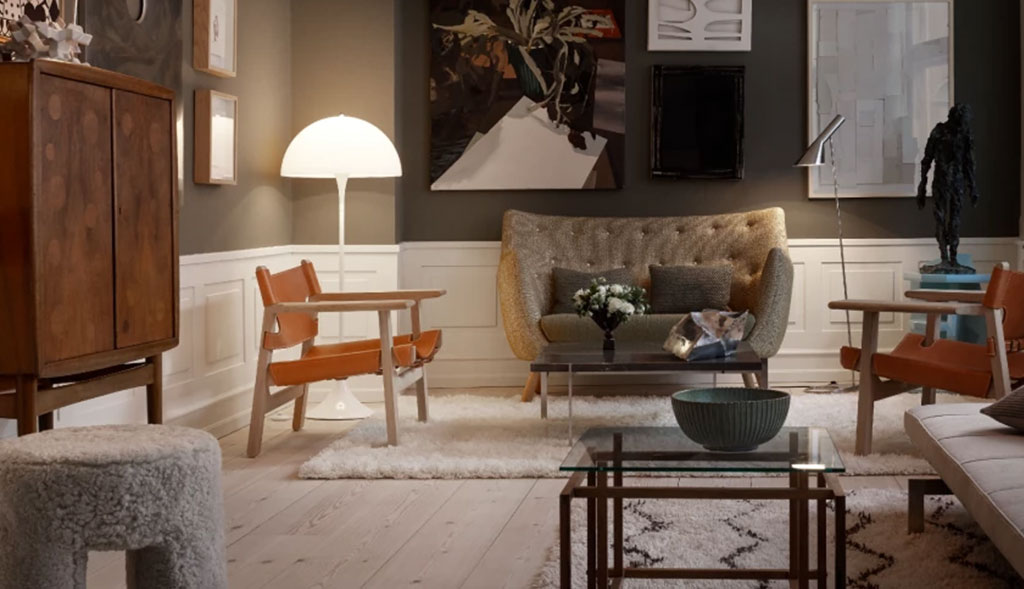
Most living rooms are underlit. Not in the sense of being dark — in the sense of relying on a single overhead source that flattens everything it touches and makes a considered space feel like a waiting room. If you've ever walked into a room and felt immediately comfortable without knowing why, lighting is usually at least part of the answer.
This guide covers how to think about living room lighting from the ground up: the principles behind it, how to layer different types of light, what to look for in the pieces themselves, and the most common mistakes people make when approaching it.
Why lighting matters more than most people think
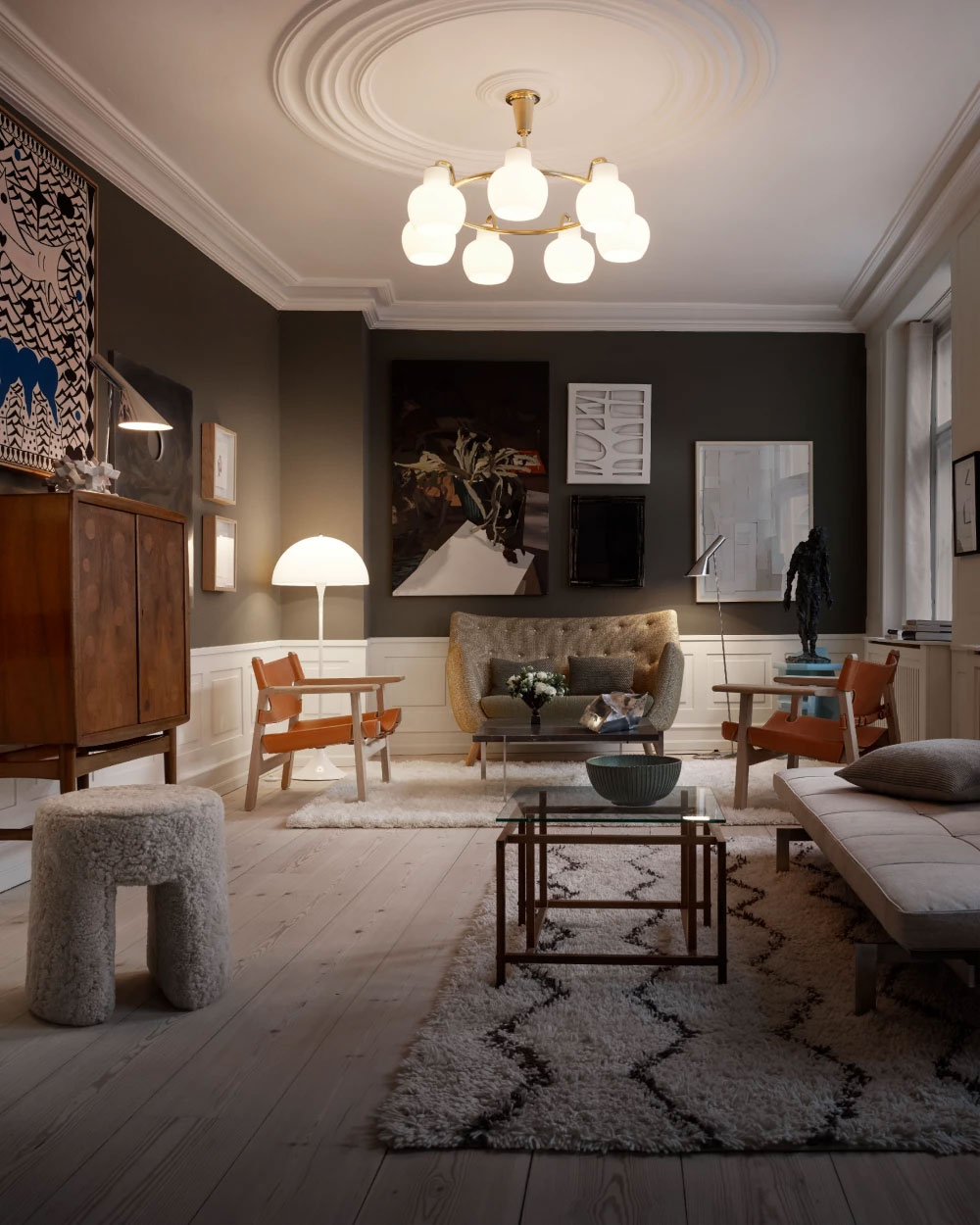
The objects in a room look different depending on how they're lit. A good sofa photographed under a flat overhead light and the same sofa lit by a warm floor lamp at dusk are practically different objects. Texture disappears under direct overhead light. Colour shifts. Shadows — which are what give three-dimensional objects their form — flatten out.
This is why rooms that have been carefully furnished can still feel somehow wrong. It is usually the lighting. And it is why the brands that take lighting seriously — Flos, Louis Poulsen, Anglepoise, &Tradition — think of it not as a finishing detail but as a foundational design decision.
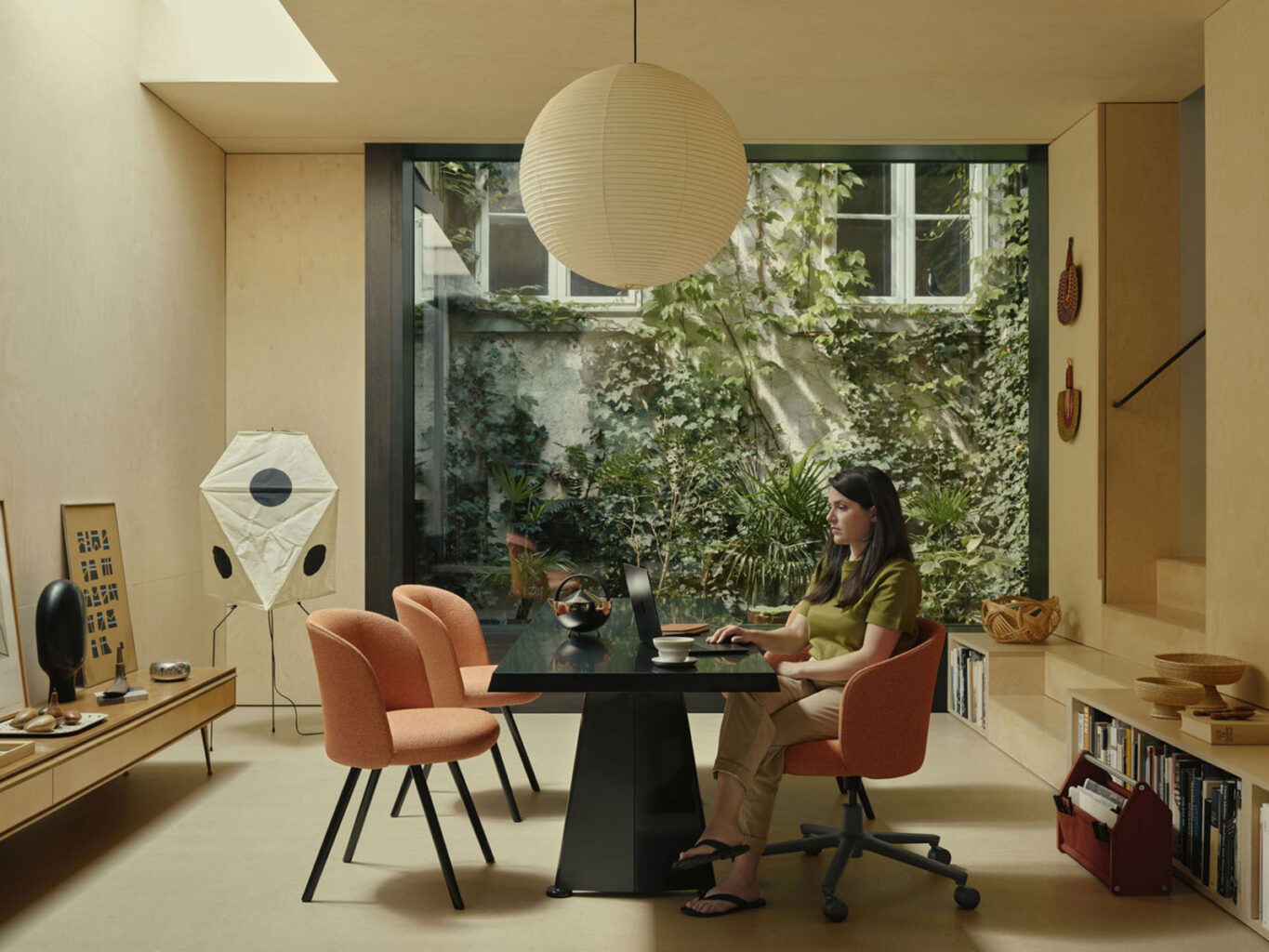
The three types of light every living room needs
Lighting designers work with three distinct layers. Understanding the difference between them is the most useful thing you can know before buying anything.
Ambient light
This is the base layer — the overall illumination that makes the room usable. In most living rooms this comes from a central pendant or ceiling light. It needs to be present, but it should not be doing all the work.
Task lighting
Lighting that is directional and purposeful — the reading lamp beside the armchair, the light positioned over a desk or work surface. It exists to make a specific activity easier. The key quality of good task lighting is that it illuminates the task without creating glare for anyone else in the room.
Accent lighting
Atmospheric — the table lamp in a corner, the floor lamp beside the sofa, the light that draws attention to a piece of artwork or architecture. Its job is to create depth, warmth and visual interest. It is the layer most often skipped, and its absence is what makes a room feel flat even when the furniture is good.
A well-lit living room uses all three. A practical rule: for every overhead light source, plan for at least two additional sources at lower levels. They do not all need to be on simultaneously — the value is in having the option to adjust the room's character depending on the time of day or the kind of evening you're having.
Pendant lights: height and placement
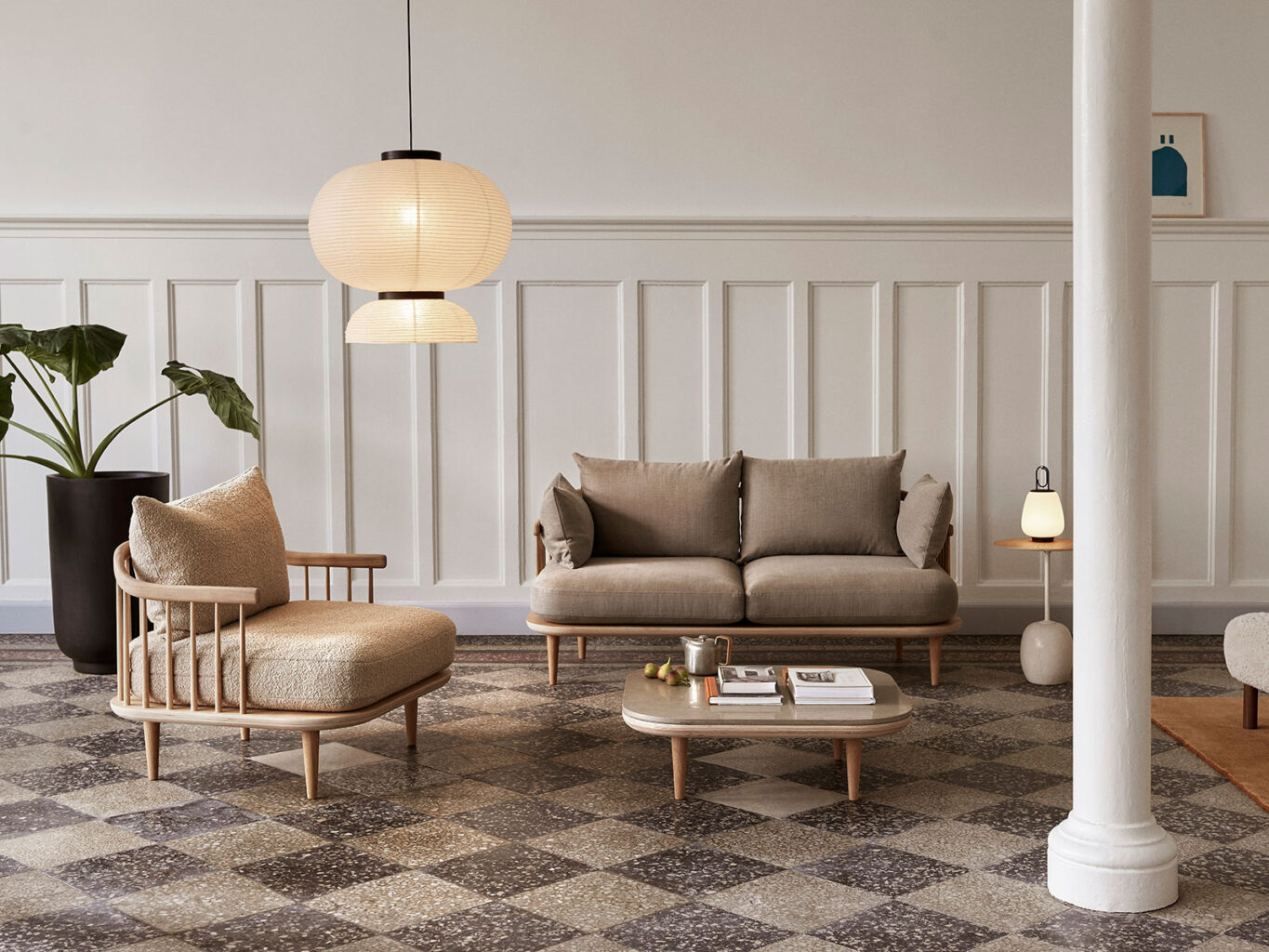
The pendant light is typically the centrepiece of living room lighting, and the most common mistake with it is hanging it too high. A pendant positioned close to the ceiling is essentially a ceiling light — it produces ambient light but loses the intimacy and the visual presence that makes a pendant worth having.
As a starting point, the bottom of a pendant shade should hang roughly 180–200cm from the floor in a standard living space. Over a coffee table or a reading area, slightly lower works well. The exact height depends on the shade — a wide, shallow shade works differently from a tall, narrow one — but the instinct should always be to bring it down rather than push it up.
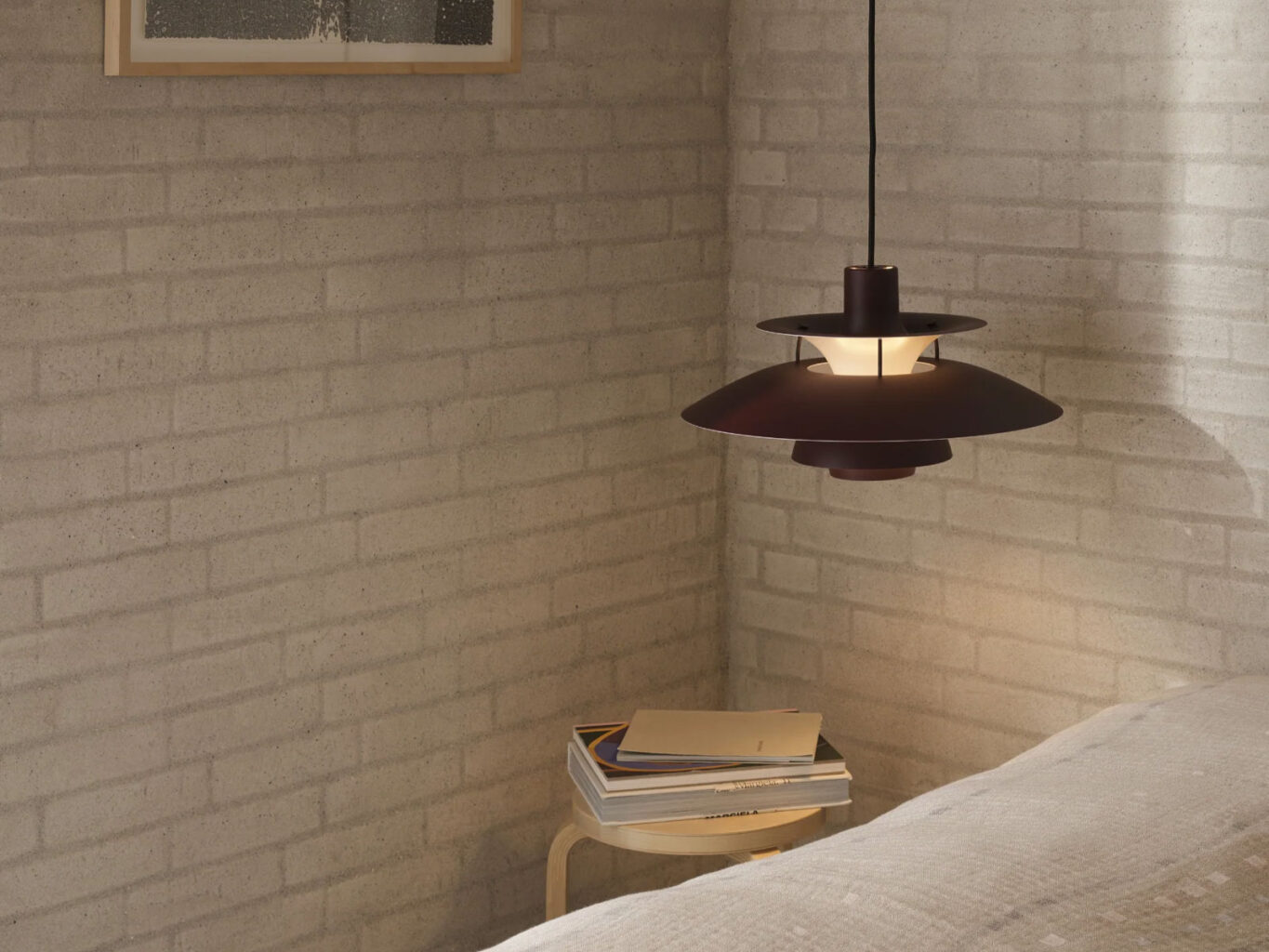
The Louis Poulsen PH 5 is worth understanding in this context. Poul Henningsen designed it specifically to eliminate glare — every surface of the five-shade assembly is angled so that no direct line of sight to the light source is possible from anywhere in the room. At the correct hanging height, it produces light that feels genuinely natural. It has been in continuous production since 1958 for the straightforward reason that the optical problem it solves has not changed.
Floor lamps: the most underused piece in a living room
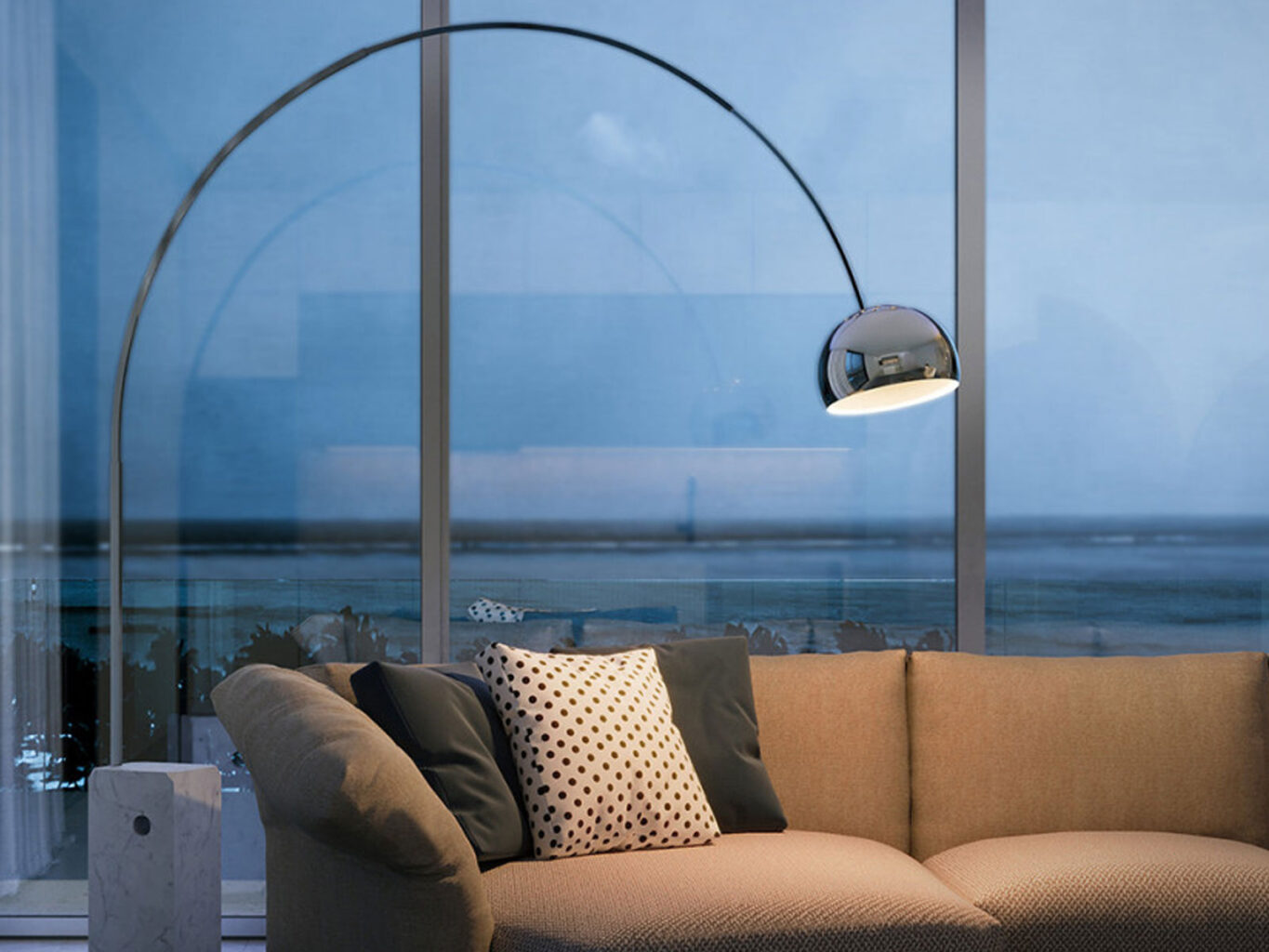
A good floor lamp changes a room more dramatically than almost any other single addition. Positioned beside or slightly behind a sofa or armchair, at seated eye level, it creates the kind of warm, directional light that makes a room feel inhabited rather than displayed.
The Flos Arco is the archetypal example — Achille and Pier Giacomo Castiglioni's 1962 solution to the problem of positioning light over a seating area without a ceiling fixture. The 2.5-metre arc positions the light source exactly where it needs to be. The Carrara marble base anchors it without requiring fixing to the floor or wall. It is a piece of lateral thinking that solved a real problem, which is why it is still here.
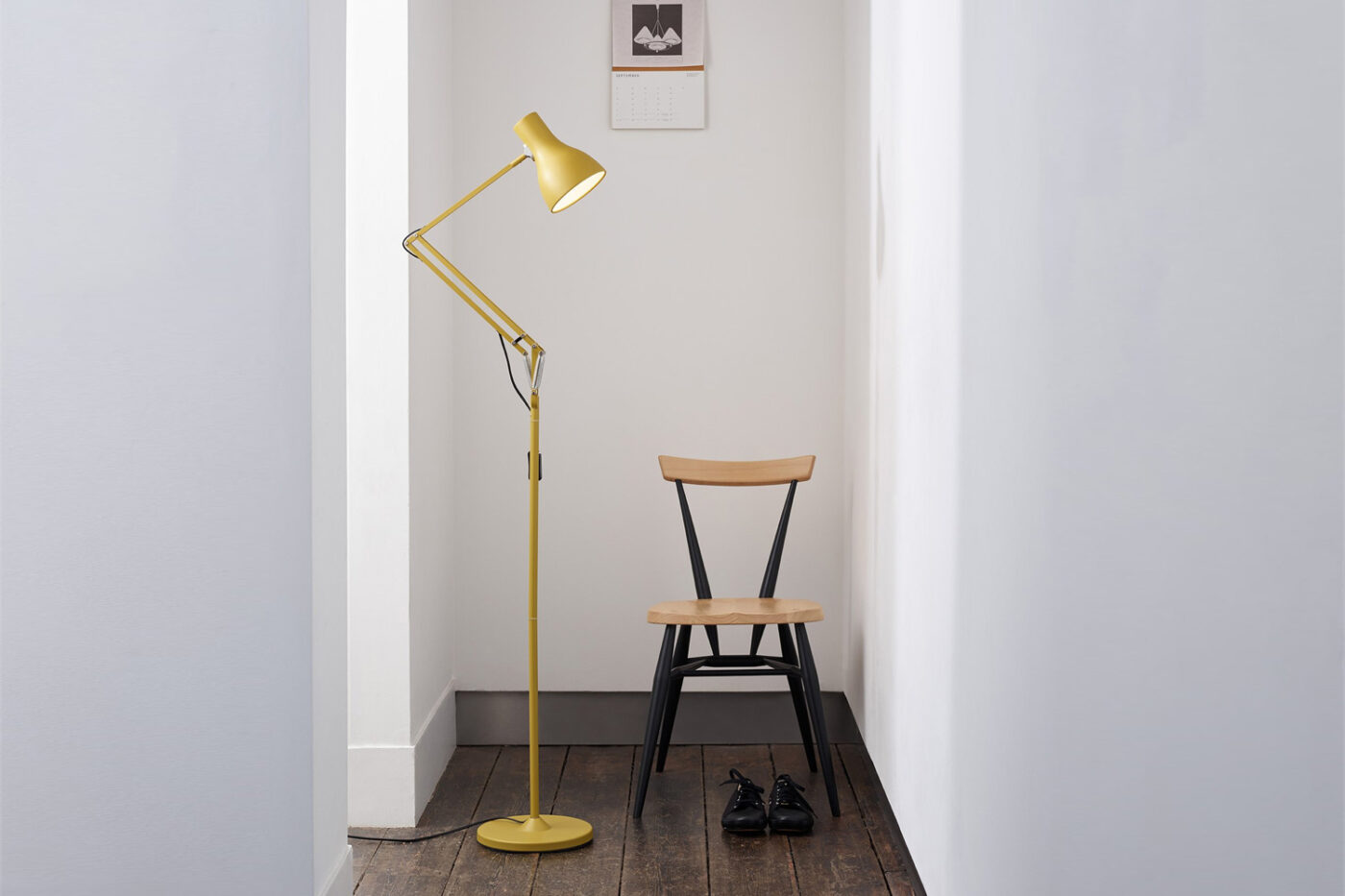
For reading specifically, the quality of the light source matters as much as the position. Look for lamps with adjustable heads, a warm colour temperature (2700–3000K), and sufficient output for reading without strain. The Anglepoise Type 75 Floor Lamp is designed precisely around this — adjustable in every axis, weighted to stay in position, with a diffused shade that prevents direct glare.
Table lamps: layering warmth into corners
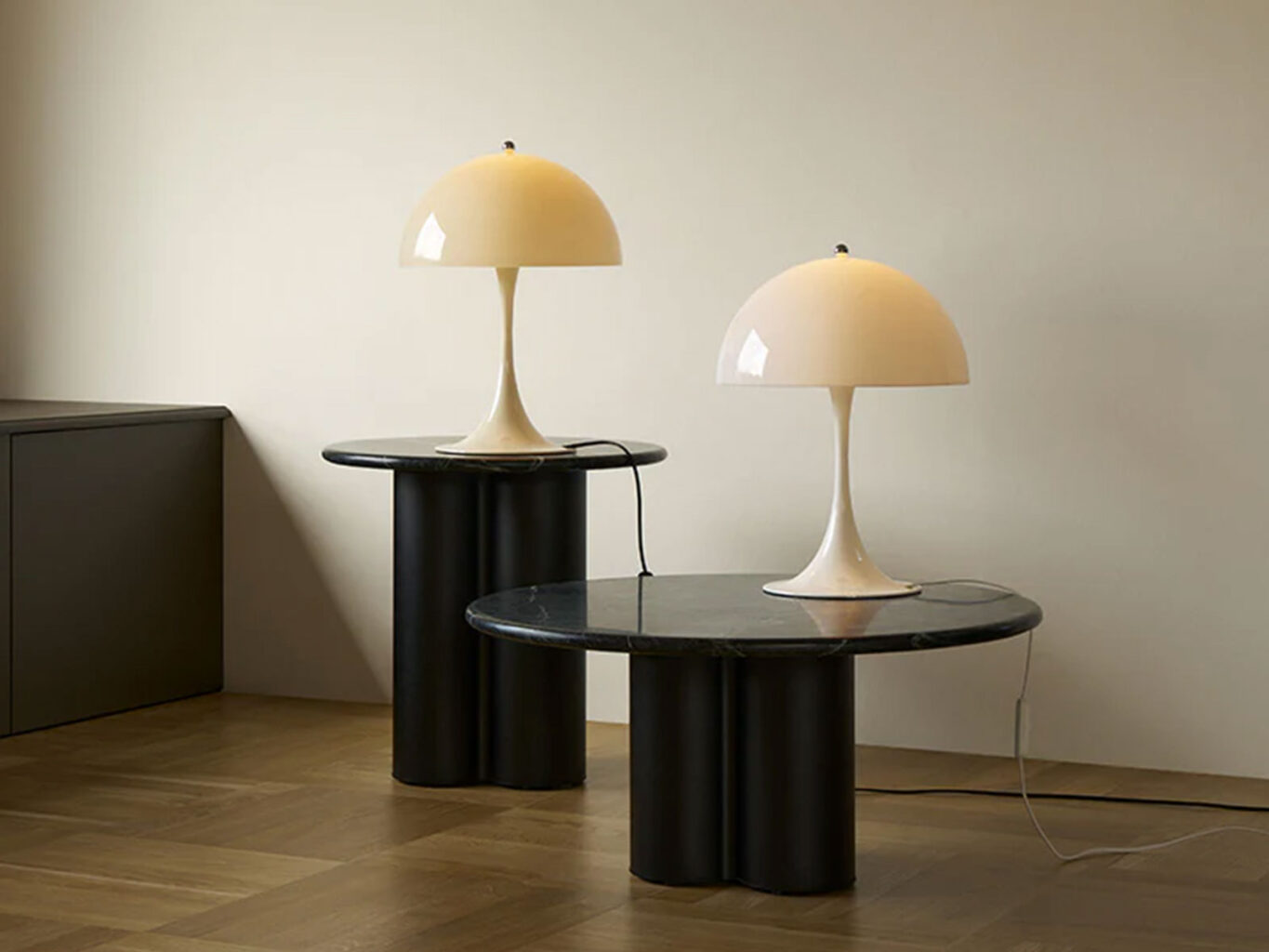
Table lamps do the work that overhead lighting cannot — they bring light sources down to human scale, warm the corners and edges of a room, and create the visual depth that makes a space feel considered rather than lit.
The position matters as much as the lamp itself. A table lamp pushed to the back of a console table against a wall bounces light off the wall and ceiling, which softens it and extends its reach. The same lamp pulled forward creates a pool of light on the surface in front of it. Both are useful — the choice depends on whether you want the lamp to illuminate the room or illuminate the table.
A few things to look for when choosing a table lamp: the proportion of the shade relative to the base (a shade that's too small or too large reads as wrong immediately, though it's hard to articulate why until you see it), the colour temperature of the recommended bulb, and whether the shade material diffuses or concentrates the light. Fabric and frosted glass diffuse; metal and clear glass concentrate.
The most common lighting mistakes in living rooms
Relying solely on overhead light.
A single central pendant or downlight grid is ambient light only. Without task and accent sources at lower levels, the room will always feel flat.
Downlights positioned incorrectly.
Recessed downlights pointed straight down create pools of light separated by shadow. If using downlights, angled adjustable fittings that wash light across walls are significantly more effective than fixed direct fittings.
Wrong hanging height for pendants.
Too high, and a pendant becomes a ceiling light with unnecessary expense. Bring it down.
Ignoring colour temperature.
Warm white (2700–3000K) for living spaces. Cool white (4000K+) is for work surfaces and bathrooms. Mixing colour temperatures in the same room creates visual dissonance that's difficult to diagnose but immediately felt.
Buying the lamp before deciding on the position.
The position of a light source is as important as the light source itself. Decide where you need light and what you need it to do before choosing the fitting.
Seeing it in person
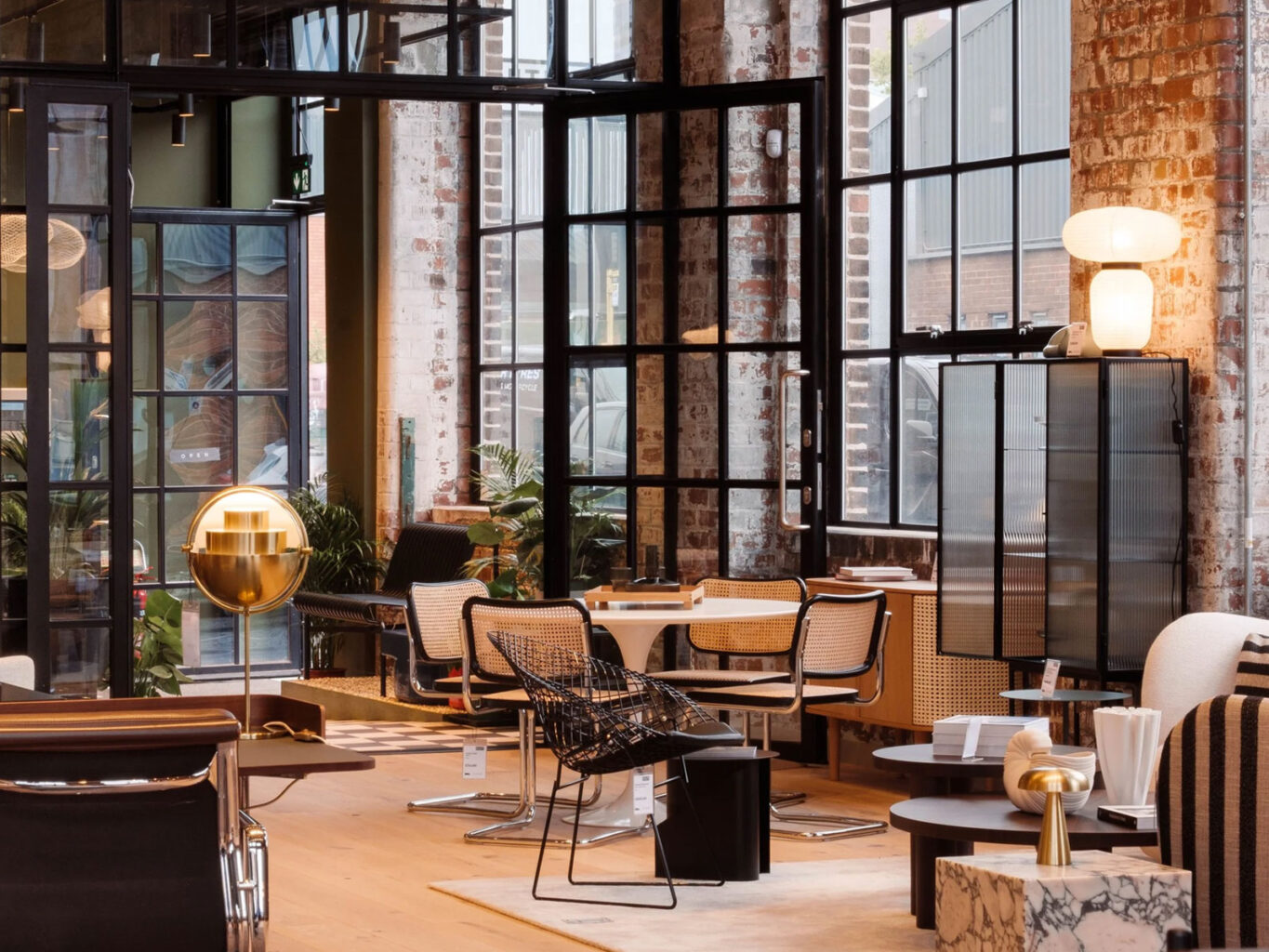
The decision is considerably easier to make in front of the actual objects. Our Liverpool showroom carries a curated selection of lighting from Flos, Louis Poulsen, Anglepoise, &Tradition and others — pieces you can see switched on, positioned in a considered space, at the correct scale. Our team are there Tuesday to Saturday and have worked with these pieces for years.
If you're working through a lighting scheme remotely, we're also easy to reach by phone or email. It's the kind of decision where a ten-minute conversation usually saves several expensive mistakes.
Utility Design are independent retailers of designer furniture, lighting and homeware, based in Liverpool since 1999. We carry Flos, Louis Poulsen, Anglepoise and over 60 other authorised brands.
-
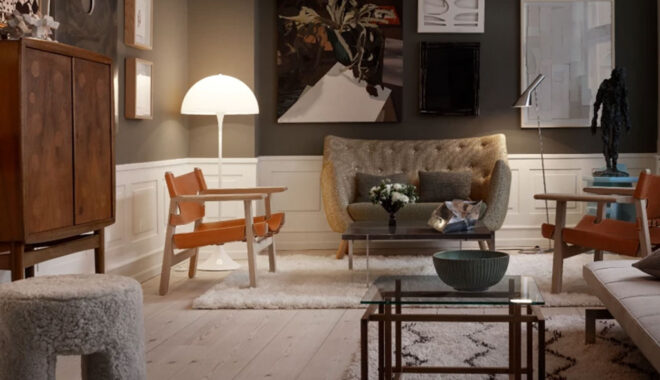
![How to light a living room properly — a guide from first principles]() Buying GuidesHow to light a living room properly — a guide from first principlesRead More
Buying GuidesHow to light a living room properly — a guide from first principlesRead MoreMost living rooms are underlit. Not in the sense of being dark — in the sense of relying on a single overhead source that flattens everything it touches and makes a considered space feel like a waiting room. If you've...
-
![Spotlight on the Carl Hansen CH24 Wishbone Chair]() Spotlight on classicsSpotlight on the Carl Hansen CH24 Wishbone ChairRead More
Spotlight on classicsSpotlight on the Carl Hansen CH24 Wishbone ChairRead MoreA true design icon, the CH24 Wishbone Chair has been in constant production since it was designed in 1949. Wishbone Chair (CH24) by Hans J. Wegner The Wishbone Chair is one of those pieces that most people recognise instantly, even...