From Salvage to System: The Work of Tom Dixon
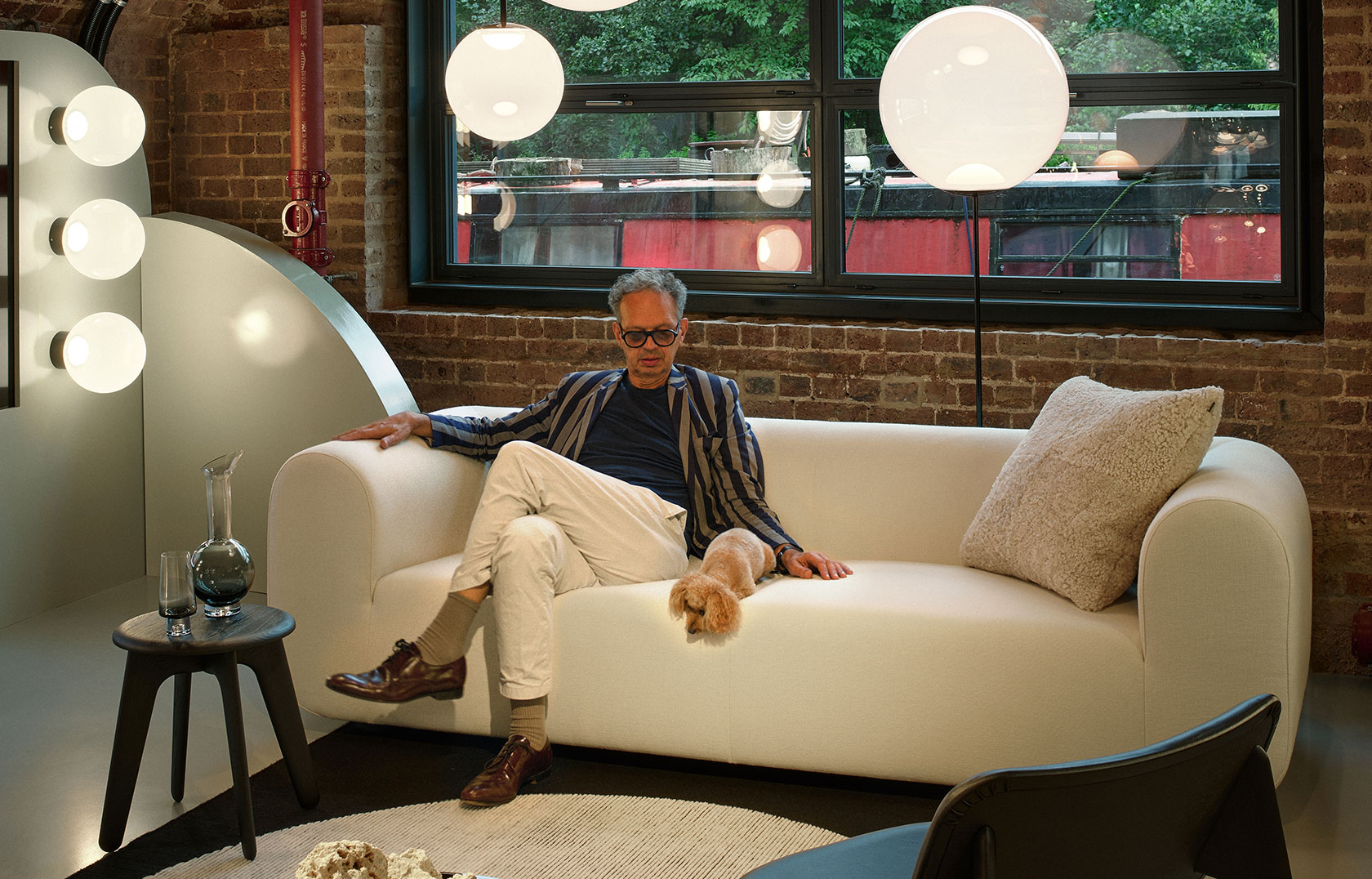
Self-taught British designer Tom Dixon didn’t follow a conventional route into design. Born in Tunisia in 1959 and raised in London, he left art school early and found his way into making through welding, picked up while repairing a motorbike in the early 1980s.
That discovery shaped everything that followed. Early work was built from scrap metal and salvaged parts, furniture that felt improvised and immediate rather than refined. It carried the energy of the time, closer to the DIY culture of late-70s and early-80s London than to traditional furniture design.
By the mid-1980s he had established a reputation for these welded pieces, leading to work with Cappellini. The S Chair, produced during this period, marked a shift. Still sculptural, but more resolved, and more at ease in a domestic setting.
Through the 1990s Dixon continued to produce limited-edition work, but the scale of his influence changed in 1998 when he joined Habitat as Head of Design, later becoming Creative Director. The role brought a broader focus, shaping not just individual products but the direction of a widely recognised retail brand.
Since launching his own brand in 2002, Dixon has built a body of work that extends beyond standalone objects. Lighting, furniture, interiors and retail environments connect through a shared palette of materials and finishes. There’s a recognisable consistency, but it rarely feels fixed.
Lighting is the clearest expression of this approach. The Mirror Ball pendants reflect and distort their surroundings, shifting with the space around them. The Beat series draws on traditional Indian brass work, translating hand-made forms into repeatable production. Melt, developed with Front, moves further into experimentation, with surfaces that appear fluid when illuminated.
Across these pieces there’s a balance between industry and atmosphere. Materials feel engineered, but the end result is often soft, ambient, even slightly theatrical. They tend to shape a room as much as sit within it.
Dixon expanded this thinking in 2007 with Design Research Studio, working across interiors and architecture. Restaurants, hotels and retail spaces carry the same ideas at a larger scale, where lighting, materials and layout are treated as a single system.
His work is held in institutions including the Victoria and Albert Museum, Museum of Modern Art and Centre Georges Pompidou, reflecting a practice that has moved from experimental beginnings into international recognition.
Discover Tom Dixon Furniture & Lighting at Utility.
-
![3daysofdesign 2026 | A Visual Diary]() All Stories3daysofdesign 2026 | A Visual DiaryRead More
All Stories3daysofdesign 2026 | A Visual DiaryRead MorePhotographic highlights from Copehagen's annual design festival. 3 Days of Design has always had a particular energy — the kind that comes from a city that takes design seriously enough to turn it into a civic event. This year felt...
-
![Renormalising how we gather, with Muuto]() All StoriesRenormalising how we gather, with MuutoRead More
All StoriesRenormalising how we gather, with MuutoRead MoreIn a light‑filled studio in Østerbro, Copenhagen, designer Maria Bruun positions her latest piece not as an answer but as a prompt. At the centre of the space sits Re‑Norm, a dining table whose geometry isn’t immediately familiar — and...